

Plasma in textile finishes: activate, modify and protect with less impact
In textiles, plasma is a surface treatment that exposes the fabric to an ionized gas filled with...
In textiles, plasma is a surface treatment that exposes the fabric to an ionized gas filled with reactive species (ions, radicals, electrons). This energetic “mist” acts only on the outermost layers of the fiber, modifying its chemistry and surface energy without resorting to aqueous baths or large loads of auxiliaries.
The central benefit is precisely that: changing the surface without wetting the substrate. This results in results that the plant immediately recognizes: better adhesion in lamination or coating, wettability adjustment (making a surface more hydrophilic so that it wets and dyes better, or more hydrophobic if repellency is sought) and selective functionalization, incorporating chemical groups that facilitate subsequent processes or provide specific properties.
What is plasma and why does it matter now?
Plasma can be defined as a partially ionized gas that contains a mixture of highly reactive species — electrons, ions, free radicals, excited atoms — capable of interacting with the surface of materials without the need for excessive wetting or heating. In the textile context, this interaction means modifying the surface energy of a fiber or fabric (its ability to get wet, to “accept” adhesives or coatings, to have reactive functional groups) without altering its internal properties or volumetric.
Sectoral context
The textile industry today lives under increasing pressure from three main axes:
-
Regulatory-environmental: Traditional finishing and dyeing processes require large volumes of water, auxiliary chemicals and generate effluents with a polluting load. Much research shows that plasma treatment significantly reduces the need for water and chemicals, contributing to a smaller footprint. environmental.
-
Operating cost and resources: The price of water, thermal and electrical energy, and the indirect costs of effluent purification are key competitiveness factors. By reducing wet stages thanks to plasma, both cost and production time are optimized. process.
-
Quality and variability: With increasingly complex fabrics (blends, microfibers, functional coatings) and faster production lines, ensuring uniformity, adhesion or “surface hygiene” becomes a challenge. Plasma allows improving the adhesion, wettability or activating the surface of materials that are difficult to wet – for example polyester or polypropylene – with good reproducibility.
Where it fits into the process flow
In practice, plasma treatment is inserted into the textile process at these key points:
-
Pretreatment: just before dyeing or printing, to improve the penetration of the bath, reduce migrations or improve dyeing uniformity.
-
Before lamination or coating: when you want to optimize the adhesion between the textile and a coating, membrane or functional layer, plasma helps to “prepare” the surface.
-
As a surface functionalization stage: for example to introduce groups that improve wettability, add repellency (even routes without fluorocarbons), antistatic, or prepare a fine-coating without the need for a bath.
-
Partial replacement of wet bath: in processes where the aim is to reduce the number of washes, the temperature or the concentration of auxiliaries, plasma appears as a more sustainable alternative.
With this, plasma acts as a technological bridge between the possibility of a traditional finish and a more efficient economy of resources, allowing the textile industry to move towards more sustainable processes without sacrificing performance or quality.
How it works
When a gas is subjected to an electrical discharge, part of its molecules are ionized and a plasma is formed: an intermediate state between gas and solid that contains reactive species (ions, electrons, free radicals) capable of modifying the outermost layer of the textile, just a few nanometers thick.
The result is not a visible coating, but a subtle chemical transformation that changes the way the surface interacts with water, dyes or adhesives.
Surface energy and functional groups
Textile fibers – especially synthetic ones such as polyester, polypropylene or PTFE – have a low surface energy: liquids tend to slide on them.
The plasma increases this surface energy, eliminating light contaminants (oils, oligomers, films) and generating new polar functional groups (–OH, –COOH, –NH₂, etc.).
This chemical change improves wettability (water or dyes are better distributed), facilitates adhesion in lamination or coating, and activates the surface for subsequent reactions.
In other applications, the opposite can be done: reduce the surface energy by depositing a thin hydrophobic or antistatic layer, depending on the gas and conditions. employees.
Equipment types
There are two main configurations of plasma technology in textile:
-
Low pressure plasma (vacuum): The process is carried out within a sealed chamber where the pressure and composition of the gas is controlled.
-
It is ideal for homogeneous and precise treatments, or for depositing thin functional layers (e.g. barriers, antistatic).
-
However, it requires interrupting the production line to introduce the material, making it more suitable for technical fabrics, composites or high-value nonwovens. added.
-
Atmospheric plasma (corona or DBD – Dielectric Barrier Discharge): works at ambient pressure, with gases such as air, oxygen or nitrogen.
-
It can be integrated directly in line (between the wash and the scarf, for example), which facilitates its continuous industrial use.
-
It is the most used in pretreatments and improvement of adhesion or wetting before stamping or coating.
Key process parameters
The behavior of plasma depends on several factors that must be precisely adjusted depending on the material and the treatment objective:
-
Power: determines the density of reactive species generated.
-
Gas type: air, oxygen, nitrogen, argon or mixtures define which functional groups will be introduced.
-
Exposure time: the longer it is, the deeper the modification will be (although excesses can damage the fiber).
-
Distance and speed: affect uniformity and surface temperature during treatment.
The balance between these parameters defines whether to activate, clean or coat the surface. Therefore, more than a single recipe, plasma requires a calibration adapted to the textile process where it is integrated.
What can it do to the fabric?
Plasma does not change the color or appearance of the tissue, but it transforms its surface behavior. Depending on the gas, the power and the application mode (activation or deposition), it can generate very different and valuable effects for the textile process.
Improved adhesion
One of the most direct uses is to improve adhesion in lamination, coating or stamping processes.
On difficult substrates such as polypropylene (PP), polyethylene (PE) or polyester (PET), plasma breaks down the inert chemical barriers on the surface and creates reactive sites where adhesives or inks can better anchor.
The result: stronger, more uniform and long-lasting adhesion, without the need for primers or chemical treatments. wet.
Hydrophilicity and wettability
When applied to synthetic fibers or difficult-to-wet blends, plasma increases the hydrophilicity of the material.
This allows the dyeing or printing baths to penetrate more quickly and more homogeneously, reducing time and consumption of auxiliaries.
It also improves dyeing reproducibility, especially in technical fabrics where surface tension variations can cause differences in tone.
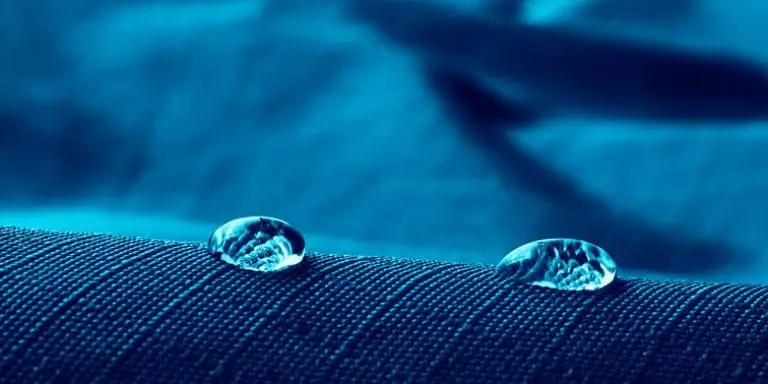
Hydrophobicity and repellency (fluorine-free)
The same physical principle can be used in the opposite direction: using PECVD (Plasma-Enhanced Chemical Vapor Deposition) techniques, ultrathin hydrophobic layers can be deposited.
This opens the door to water or dirt repellent finishes without resorting to fluorocarbons (PFC-free).
Although still in industrial development, this route points to a sustainable alternative to traditional treatments of repellency.
Selective chemical functionalization
Plasma also allows the introduction of functional groups such as –OH, –COOH or –NH₂ that react with other compounds or promote controlled chemical cross-linking.
Thanks to this, the surface of the fabric can anchor specific functions:
-
Antimicrobial or antistatic properties
-
Easy ironing or easy-care through reticular links
-
Improved compatibility with functional coatings or inks
In some cases, plasma is used prior to an impregnation bath to facilitate the active agents to fix more efficiently.
Comparison with wet pretreatments
The greatest attraction of plasma in textiles is its ability to replace or reduce traditional wet stages, where the intensive use of water, thermal energy and chemical auxiliaries represents both an environmental impact and a considerable operating cost.
However, like any emerging technology, its adoption requires evaluating the balance between environmental benefit, initial investment and process compatibility.
Water and effluent
Conventional wet processes (desizing, bleaching, mercerizing, solvent cleaning or chemical adhesion) can consume between 50 and 150 L of water per kg of processed textile, generating effluents with high COD and suspended solids.
Plasma treatment, being completely dry, eliminates this direct consumption of water and reduces the generation of effluent to zero.
This means less debugging cost and easier compliance with increasing environmental limits. strict.
Energy
Energy savings come from not heating bathrooms or drying fabrics after each wet stage.
A conventional foulard may require between 1.5 and 3 MJ/kg just to evaporate residual water; Plasma works at room temperature or slightly elevated.
However, plasma equipment consumes electrical energy (around 0.5–1 kWh/m² treated, depending on power and gas), so the advantage depends on the energy source and the design of the line.
Chemicals and auxiliaries
Traditional wet pretreatments use surfactants, alkalis, oxidants or brighteners.
Plasma, by working with gases such as air, oxygen or argon, drastically reduces the amount of necessary auxiliaries, and in many cases eliminates them completely.
This means less load in the treatment plant (WWTP) and less variability between batches due to differences in formulation or depletion of the bathroom.
Capex/Opex
-
Initial investment (CAPEX): atmospheric plasma equipment is more expensive than a foulard or a conventional pretreatment line, although modular systems allow scaling according to production.
-
Operating costs (OPEX): low maintenance (no pumps, baths or heating of large volumes), controlled electricity and gas consumption.
-
Productivity: In continuous mode, plasma lines can reach speeds of 30–50 m/min, comparable to a foulard, with immediate start-up (without filling or emptying bathrooms).
In short, plasma does not replace all wet processing, but it can reduce or eliminate the most resource-intensive stages.
Its value multiplies when integrated into energy efficiency and sustainability strategies—for example, together with air recirculation, photovoltaic energy or eco-designed auxiliaries.
What fabrics and lines benefit the most
Plasma treatment is not universal, but its effectiveness is especially notable in fabrics and polymers where traditional wet processes have limitations. The key is how the plasma modifies the surface energy and contact chemistry without altering the structure of the material or adding moisture.
Cotton and cellulosic blends
On natural fabrics, plasma can clean surface contaminants, remove wax or oil residue, and increase wettability before processes such as dyeing or printing.
Although cotton is already naturally hydrophilic, plasma can improve its dyeing affinity and reduce the need for dyeing agents. wetting.
Polyester (PET) and polypropylene (PP)
These synthetic substrates are difficult to wet and adhere due to their low polarity. Plasma, on the other hand, breaks the inert surface chains and generates functional groups that increase the surface energy, allowing better adhesion of inks, coatings or adhesives.
In the case of PP—one of the most problematic materials for dyeing or lamination—plasma could become one of the most effective and clean solutions. available.
Nonwovens and technical textiles
In filtration, hygiene or automotive nonwovens, plasma improves critical properties such as liquid migration, retention capacity or interlaminar adhesion.
Furthermore, as these are continuous, non-contact processes, the fabric maintains its porous structure and does not deform, something key in microfiber materials or meltblown.
Denim and selective pretreatments
Plasma is also being explored as a surface pre-activator in denim fabrics, before the application of enzymes or laser.
It allows the wettability or chemical reaction of the surface to be locally modified, optimizing the wear or resining processes without adding wet stages or oxidizing products.
Industrial formats
Textile plasma systems adapt to different production environments:
-
Continuous wide weave lines → ideal for lamination, coating and dyeing.
-
Roll-to-roll (R2R) processes → used in film, nonwovens or technical textiles.
-
Batch or chamber equipment → for limited size pieces or functional fabrics with high added value (PPE, composites, filters).
Overall, the tissues that respond least to traditional wet methods are those that benefit the most from plasma, both in surface quality and process efficiency.
The challenge is to integrate it into existing lines with a continuous flow and adjustable parameters, something that is already possible today thanks to new atmospheric systems. modular.
Limitations and myths
Although textile plasma has advanced a lot in recent years, it is not a magic or universal solution. Its effectiveness depends on the material, the type of process and, above all, how it is integrated into the production line. Here it is important to separate facts from myths.
Durability of effect
The effect of plasma—whether increase in surface energy or introduction of functional groups—is not always permanent. Over time, the molecular chains of the polymer can reorient and “hide” the active groups, reducing the adhesion or wettability initially achieved.
Therefore, it is recommended to process the fabric shortly after treatment (dyeing, lamination or coating) or apply a post-fixing step that stabilizes the surface modification.
Widths and maximum speeds
Current atmospheric plasma equipment reaches high ranges, but the higher the speed or thickness, the shorter the effective exposure time for the tissue surface. On very dense or multilaminate fabrics, treatment may require multiple passes or adjustments in power, distance and gas.
Substitute vs. simplify
A common myth is to think that plasma completely replaces traditional chemicals. In reality, its function is to reduce or simplify formulations, not eliminate them completely.
Examples:
-
Instead of removing the sizing, the plasma improves its anchorage.
-
Instead of removing a coating, it facilitates adhesion with less chemical promoter.
-
Instead of eliminating baths, plasma reduces their number or concentration.
In short, textile plasma does not replace the chemical experience, but rather amplifies it. It allows you to obtain better performance with fewer resources, as long as it is integrated correctly and its physical and temporal limits are understood.
Feasibility checklist for your plant
Before considering the incorporation of a plasma system in a textile line, it is advisable to carry out a rigorous technical and economic analysis. This technology can provide real advantages—if applied at the right point in the process and with defined objectives—but not all plants or all tissues are good candidates.
Here is a practical initial evaluation checklist.
1. Objective of treatment
Define precisely what you want to achieve.
Activating a surface to improve adhesion is not the same as depositing a functional layer (hydrophobic, antimicrobial or antistatic).
-
Surface activation: improves substrate energy and wettability.
-
Cleaning or degassing: removes contaminants and light finishes.
-
Thin Film Deposition (PECVD): Adds specific properties without a liquid bath.
Each objective requires different power, gas, and exposure time, so the initial definition is key to the return on investment.
2. Substrate and production line
Evaluate widths, speeds and layout of the line where plasma could be integrated:
-
Maximum fabric width compatible with the equipment.
-
Process speed (m/min) and if it is feasible to maintain it without loss of effect.
-
Physical space and position on the line (before dyeing, between foulard and dryer, before lamination).
-
Nonwovens, polyesters and synthetic blends tend to respond better, while cotton requires greater control to avoid overtreatment.
3. Final quality requirements
Check which properties should be maintained after treatment:
-
Color fastness, if plasma is applied before dyeing.
-
Feel and drape of the fabric, especially in soft or fashionable finishes.
-
Breathability or vapor permeability, in technical fabrics.
A well-adjusted plasma does not alter comfort or texture, but excess energy can modify the hand or generate overoxidation.
4. Balance of costs and sustainability
Plasma can drastically reduce water and effluent consumption, but requires electrical energy and technical gases.
Before investing, compare, because if the cost of water, energy or effluent treatment is high – as is increasingly the case in Europe – the return of plasma can be achieved in a few years, especially in high productivity lines or in technical fabrics with high added value.
How ADRASA can help
At ADRASA we help textile plants evaluate and integrate new technologies in a safe and sustainable way.
From the laboratory to the production line, we offer testing with eco-designed chemicals, validation of results (pH, wetting, adhesion, fastness) and technical training for plant teams.
Our goal: convert innovation into better performance, lower impact and shared knowledge.
Conclusion
Plasma treatment represents a promising way to reduce the environmental impact of textile finishing without compromising performance.
By modifying the surface of the fibers without the need for aqueous baths, it allows shorter, more efficient and cleaner processes, aligned with the decarbonization and responsible consumption objectives that guide the sector.
Each plant has its own starting point — that is why the value lies in evaluating, testing and adapting the innovation to the reality of production.