

“On-demand” functional finishes: when the fabric activates its performance
For years, many functional finishes have been applied as if the fabric had to perform at its best...
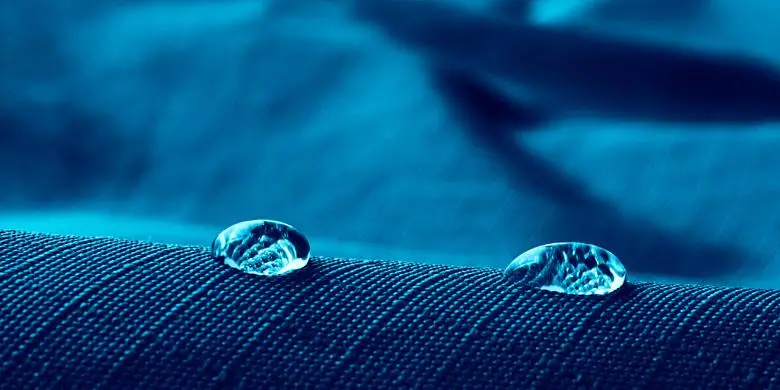
For years, many functional finishes have been applied as if the fabric had to perform at its best all the time: maximum repellency, maximum protection, maximum thermal sensation… even when the user does not need it. The on-demand approach proposes a smarter change: activating or intensifying the function only when the appropriate stimulus appears (for example, humidity, temperature, friction or light).
And why does it make sense right now? Because the sector is under pressure on several fronts at the same time:
-
Real performance, not theoretical. The user expects the functionality to respond to specific situations (sweat, rain, temperature changes) and not just a technical sheet. Activatable finishes seek to perform “on demand,” with a more coherent experience.
-
Comfort as a priority. In outdoor, workwear and sportswear, comfort is a combination of changing sensations: ventilation, thermoregulation, touch, moisture management. The dynamic response fits better than a static solution.
-
Process and use efficiency. If a property is activated only when needed, the design can avoid “overdosing” performance, reduce trade-offs (for example, between repellency and breathability) and improve consistency throughout use.
-
Verifiable claims. Today it is not enough to affirm that a textile “does more”: the value chain needs evidence, metrics and test methods that demonstrate what is activated, when and with what durability. The on-demand concept forces us to think about data, repeatability and control.
In short: finishes that can be activated on demand represent a natural evolution of functional chemistry: more aligned with the actual use of the fabric, finer in the balance between performance and comfort, and stronger in justifying what is promised.
What does “on-demand” mean?
When we talk about on-demand functional finishes, we are not referring to “a different finish”, but rather a different logic: the property is not constant, but responsive. That is, it appears, intensifies or is modulated when the tissue detects an external stimulus and the chemical system is designed to respond to that “trigger”. In technical literature it is usually framed within stimulus-responsive materials and polymers (stimuli-responsive / smart materials).
What types of stimuli are the most common?
-
Moisture / sweat: the finish changes its behavior when humidity increases (for example, adjusting affinity for water, swelling or opening micro-structures), allowing better sweat management and dynamic comfort.
-
Temperature: two well-known families come in here:
-
Phase change materials (PCM) that absorb/release heat to smooth thermal spikes and improve comfort.
-
Thermochromic or thermo-responsive systems (reversible changes due to temperature), which in textiles are used both as an indicator and in designs. functional.
-
Light (especially UV): Photo-responsive finishes (e.g., photochromism) that change with UV radiation or visible light; They are used for signage, sensed or functional/aesthetic effects.
-
pH (chemistry of the environment): systems designed to respond to changes in pH (more common in “smart” coatings and responsive polymers), with applications where the chemical environment changes and a response is sought controlled.
-
Friction/pressure/mechanical deformation: responses activated by mechanical stimuli (motion, tension, abrasion), which can open/close surface structures or trigger changes in the covering.
The key is that on-demand does not mean “more chemical”, but better design of when and how it acts. And that forces us to define three things from the beginning: (1) what the real stimulus is, (2) what measurable response we expect, and (3) with what durability (washing, abrasion, aging) it must continue to function.
What functions can be activated
The on-demand idea is not limited to “a smart fabric”: it translates into specific functions that can appear or intensify depending on the environment. These are some of the most relevant today:
Comfort and thermoregulation
One of the best-known avenues is the use of phase change materials (PCMs), which absorb or release heat during their phase transition to smooth thermal peaks. They are integrated into the textile by encapsulation or coating, and are used in applications where the thermal comfort is key.
Adaptive breathability
Here the goal is for the system to “breathe more” when the body generates humidity/sweat. In research, work has been done with membranes and coatings thermo-humidity sensitive that adjust their permeability depending on the environment (humidity/temperature), seeking a dynamic balance between protection and comfort.
“Adjustable” repellency/wettability
At the conceptual level, some stimulus-responsive systems allow the affinity of the surface to be changed (more hydrophobic or more hydrophilic) depending on the stimulus. In textiles, this is investigate as a way to modulate superficial behavior instead of “forcing” a single permanent condition.
UV protection and sensing
In addition to protection, there are interesting developments in photo-responsive textiles (e.g., photochromic coatings/fibers) that change state/color with UV and can act as indicator or additional function (exposure warnings, signage, etc.).
Some photochromic coatings also can improve behavior against UV.
Odor/antimicrobial
Antimicrobial finishes have advanced (silver, zinc, hybrid solutions, etc.) and a lot of research is done into durability and resistance to washing, because without that the function is quickly lost.
But here “on-demand” requires caution: in addition to technical efficiency, it matters what is declared and how it is justified. In the EU, “treated articles” and biocidal claims have specific rules under the BPR framework, and it is advisable to align with reference guides.
Therefore, in activatable finishes, the question is not only “what function can I add?”, but “when it is activated, how it is measured and how long it lasts” (washes, abrasion, aging).
How to get it
For a finish to be truly on-demand, it is not enough to add a functional ingredient. Typically, a chemical (and sometimes physical) architecture is designed that translates an external stimulus into a measurable response. These are the most common routes:
Responsive polymers
They are polymers designed to alter their structure or their interaction with water/air when the environment changes (temperature, humidity, pH, etc.). This transition can cause, for example, changes in permeability, swelling, surface affinity or mobility of segments.
Microencapsulation and controlled release
The idea here is to encapsulate an active (fragrance, functional agent, PCM, etc.) and design the capsule to respond to a stimulus: friction, heat, humidity or pH.
In textile, is used to dose function and improve durability, releasing gradually or on demand.
PCM (Phase Change Materials) as “thermal battery”
PCMs are a very specific case, but very useful: they store and release heat when they change phase. At an industrial level, they are applied in the form of microcapsules or coatings to provide thermal cushioning in actual use.
Coatings and functional “hydrogels”
Instead of modifying the entire fiber, a functional layer (coating) is created that acts as an “intelligent interface” with the environment. This family includes polymeric matrices, cross-linked networks, and even hydrogels that respond very well to humidity/temperature due to their swelling capacity and transport.
Multilayer or hybrid systems
In demanding applications, layers with different functions are combined: an anchoring/adhesion layer, a responsive active layer, and a protective layer (durability, resistance to washing, abrasion, UV). This allows you to separate objectives: function vs. endurance.
On-demand is more engineering than “ingredients”. The choice of architecture depends on:
-
the actual stimulus (sweat/humidity, temperature, UV…),
-
the response you want to measure (permeability, comfort, repellency…),
-
and the required durability (washing, abrasion, aging).
When these three variables are clear, that is when the concept stops being “attractive innovation” and becomes an industrializable solution.
Industrial and sustainability challenges
On-demand finishes sound very promising, but their industrial adoption depends on overcoming very specific challenges. In practice, what determines success is not just “that it is activated”, but that it is done in a controlled, repeatable manner and in accordance with technical and regulatory requirements.
Real durability
The first filter is resistance to use: domestic or industrial washing, friction, abrasion, UV exposure, thermal variations…
In systems based on capsules, coatings or responsive polymers, durability is usually the critical point: if the mechanism degrades or is “washed away,” the function disappears.
Compatibility with processes and materials
An activatable finish has to coexist with the reality of the wet processing: different substrates (cotton, PES, mixtures), previous preparations, dyeing, auxiliaries, neutralizations, drying/thermosetting…
Here are practical questions:
-
Does it interfere with staining or other subsequent finishing?
-
Does it affect the feel, tone or solidity?
-
Does it require temperatures/curing times that are incompatible with the article?
“Trigger” control
In a laboratory it is easy to demonstrate a response to a stimulus; In the plant, the stimulus can be diffuse: variable humidity, non-homogeneous temperatures, irregular UV exposure…
The challenge is that the activation is:
-
selective (activated where appropriate),
-
reversible or stable depending on the design,
-
and without degrading other features (for example, comfort vs. repellency vs. touch).
Chemical safety and compliance
There are no shortcuts here: any innovation must fit security and market requirements. For example, if the finish includes biocides or antimicrobial claims, the EU framework applies. treated articles and the rules of communication/claims under the BPR.
How to verify
On-demand requires essays that capture “before vs after”:
-
What exactly changes with the stimulus?
-
How much does it change?
-
How many use/wash cycles can it last while maintaining the effect?
Without a clear testing method, the risk is to end up with vague messages that the market no longer accepts.
In short, the challenge is not only to create an intelligent response, but to turn it into a stable, measurable response that is compatible with the process, the product and the regulatory framework.
What to look for to adopt it: 5 practical criteria
On-demand functional finishes make sense when approached with an industrial mindset: less “wow effect” and more verifiable criteria. If you’re evaluating these types of solutions, these five points help separate the promising from the applicable:
1. A clear trigger
Define the stimulus unambiguously: humidity, temperature, UV, friction, pH…
And above all, plant it: at what humidity range? at what temperature? with what intensity of light? If the trigger cannot be described accurately, it will be difficult to control.
2. A specific metric
An on-demand finish must answer a measurable question:
-
Does it increase breathability by X%?
-
Does a specific method improve moisture management?
-
Does it reduce the perceived temperature in a defined range?
-
Without metrics, function becomes a concept, not a feature.
3. Durability according to actual use
It’s not enough to have it work on day 1: you have to determine how many washes/cycles are expected and what degradation is acceptable. In technical textiles, durability is often the deciding factor for ROI and customer satisfaction.
4. Process compatibility
Before scaling, confirm compatibility with:
-
substrates and mixtures,
-
tincture and other auxiliaries,
-
drying/curing conditions,
-
touch, color and solidity.
-
Many solutions fall apart here: not due to lack of innovation, but due to friction with the productive flow.
5. Documentation and traceability
Increasingly, the value is not just in the chemistry, but in the evidence package: clear data sheets, test methods, results, regulatory compliance and documentary consistency. This facilitates approvals, reduces uncertainty and improves transfer to the client.
To conclude, the finishes that can be activated on demand point to a logical evolution of functional textiles: more adaptive performance, more intelligent comfort and better supported claims. But their adoption accelerates when they are evaluated with these five criteria from the beginning.
Explore more technical articles and innovation in textile chemistry on our blog: https://adrasa.name/blog