

Chemical recycling of polyester-cotton blends
On the path towards a more circular textile economy, one of the main technical obstacles remains...
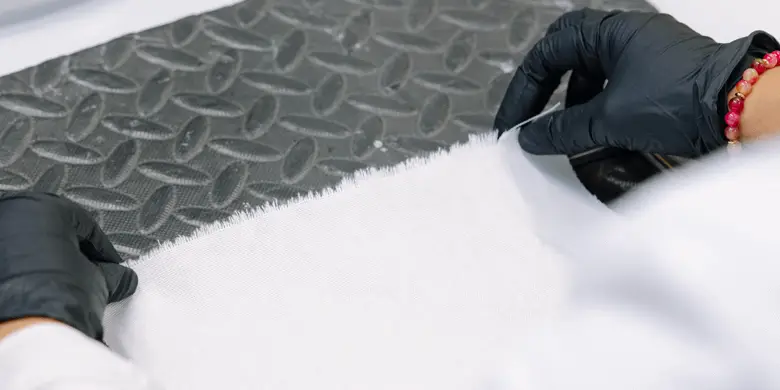
On the path towards a more circular textile economy, one of the main technical obstacles remains the efficient recycling of composite fabrics. Polyester and cotton blends – present in a huge proportion of everyday garments, from T-shirts to industrial uniforms – represent a real challenge for current recycling technologies.
Unlike 100% synthetic or natural fabrics, polyester/cotton blends combine fibers with very different chemical structures and physical properties. This difference complicates their mechanical and chemical separation, which means that, in practice, most of this textile waste ends up in landfills or is incinerated.
The need for specific solutions for these materials is not only urgent from an environmental point of view, but also key to closing the materials cycle in the textile sector. In recent years, research in chemical recycling processes has taken a decisive step to address this challenge, opening new avenues to recover both cotton cellulose and polyester in an efficient and reusable way.
The advancement of the University of Amsterdam and Avantium
A pioneering development in the chemical recycling of mixed fabrics comes from the collaboration between the University of Amsterdam (UvA) and the Dutch company Avantium. Published in Nature Communications, this innovative process addresses the problem of polyester/cotton blends with unprecedented efficiency.
The method is based on the use of superconcentrated hydrochloric acid (43% by weight), at room temperature, to selectively dissolve the cellulose of cotton without affecting thepolyester. Thus, cotton fiber is hydrolyzed into glucose, a valuable byproduct that can be used in applications such as bioplastics and renewable polymers (for example,FDCA/PEF).
Meanwhile, the polyester remains structurally intact and can be recovered in physical form, allowing for conventional recycling, either mechanical orchemical. The pilot tests carried out with Avantium’s Dawn technology (in reactors of up to 230L) have obtained glucose yields of 70% in laboratory conditions, and between 56% and 75% on a pilot scale, demonstrating its technical feasibility andeconomic.
This dual approach allows, for the first time, efficient fractionation of blend components, recovering both cotton and polyester separately and usable. It is therefore positioned as a revolutionary solution for waste considered until now.”unrecyclable”.
Step by step of the process
The innovative method developed by the University of Amsterdam and Avantium stands out for its operational simplicity and its scaling potential. The chemical recycling process of polyester/cotton blends can be divided into four main phases:
Selective digestion of cotton
The first step consists of subjecting the polycotton fabric to a treatment with highly concentrated hydrochloric acid (43% by weight). At room temperature and without additional pressure, this acid hydrolyzes the cotton cellulose, breaking it down into glucose molecules. The notable thing about the process is that the acid does not attack the polyester, which remains stablethroughout the reaction.
Phase separation
Once hydrolysis is complete, the resulting mixture contains a liquid phase rich in glucose and a solid phase composed of intact polyester fibers. The separation of both phases is carried out by simple filtration or centrifugation, without the need for additional reagents or complex processes.
Recovery and use of byproducts
The glucose obtained can be recovered, purified and used as raw material in biotechnological processes. Its possible applications include the production of furandicarboxylic acid (FDCA), a key precursor for bioplastics such as PEF, or the generation of ethanol and other bioproducts.biological basis.
Recycling of the resulting polyester
Separated polyester fibers can be reincorporated into conventional recycling circuits, either by mechanical (extrusion and spinning) or chemical (depolymerization and repolymerization) methods. Since they have not been exposed to extreme temperatures or aggressive solvents, they retain their original structure and quality, making it easier to reuse them.textile or technical products.
Other emerging technologies
Although the chemical process of Avantium and the University of Amsterdam represents one of the most promising advances in the recycling of polyester/cotton blends, there are other emerging technologies that also seek to solve this challenge from different approaches:
Solvent separation
One of the most studied strategies consists of the use of selective solvents that chemically separate the tissue components. The Worn Again Technologies project, for example, has developed a closed process that dissolves polyester, allowing cotton to be separated mechanically or enzymatically. This technique allows the recovery of high purity fibers, although it still faces challenges related to the cost and sustainability of the products.solvents used.
Ultrasonic processes
Some centers ofinvestigationhave explored the use of high-intensity ultrasound to weaken the bonds between cotton and polyester fibers. This technique does not dissolve the materials, but facilitates their subsequent separation through heat or milder chemical treatments. It is still in experimental stages, but offers an interesting physical approach to reduce the need foraggressive reagents.
Selective enzymes
In the field of biotechnology, the use of specific enzymes capable of degrading cellulose without affecting the polyester is also being investigated. Although its efficiency is currently limited and requires long reaction times, this option stands out for its low environmental impactand its potential in controlled enzymatic recycling processes. Some groups likeChangesThey have successfully applied similar methods to PET, and this is expected to evolve into textile blends.
Conclusion
The advance in technologies to recycle polyester/cotton blends represents a decisive step towards a more circular and sustainable textile economy. Until now, most of these garments ended up in landfills or were incinerated due to the difficulty of separating their components. Solutions such as the chemical process from Avantium and the University of Amsterdam allow complex waste to be transformed into reusable raw materials, significantly reducing the environmental footprint of the fashion sector.
Furthermore, the valorization of byproducts such as glucose—a potential basis for bioplastics—opens new opportunities for innovation and synergy with other industries, such as green chemistry or the bioeconomy.
However, there are still important challenges to be resolved:
-
Industrial scalability: many current processes are still in the pilot or laboratory phase. The transition to large-scale production will require investment, cost optimization and regulatory adaptation.
-
Chemical waste management: some methods (such as those based on acids or solvents) require closed, safe systems to avoid negative environmental impacts.
-
Product design: it is key to move towards the design of “recyclable by design” garments, facilitating the separation of fibers or even using mixtures that are easier to recycle from the beginning.
Therefore, the future of mixed textile recycling will depend on both technological development and collaboration between brands, producers, recyclers and legislators. The recent proposal by the European Union to implement regulations oneco-design and extended producer responsibility (EPR)in textiles it is an important step in that direction.
At ADRASA we closely follow the technologies that promote more circular textile chemistry.
Chemical recycling of blends such as polyester/cotton opens new opportunities to reduce waste and move towards a more sustainable economy.
Si quieres saber más sobre innovación en acabados textiles, síguenos o contacta con nuestro equipo técnico: adrasa.name/contact-confection